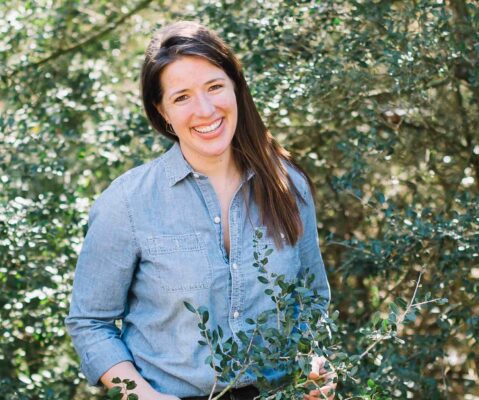
Name: Abianne Falla
Location: Catspring, Texas
Business name: Catspring Yaupon
Tribal affiliation: Chickasaw
Why do you think it’s important to make traditional foods accessible for Native people?
Accessibility, for me, is about restoration. When Native people can actually get their hands on traditional foods that are grown on their land, harvested by their communities, and priced fairly, it restores something that was deliberately severed.
With yaupon, there are roughly 20 million acres of wild growth across Texas alone and more across the Southeast. This plant has been a source of resilience and connection for generations. Our job is to make sure that relationship is available again, and that the people who carry this legacy are the primary stewards and beneficiaries of it. Not just consumers, but keepers.
That means being accountable to the resource; harvesting in ways that protect it so it can be shared without being depleted. It means dignified employment. It means transparency. Accessibility without those things is just extraction with better branding.
What is the importance of an Indigenous diet for a healthy lifestyle?
An Indigenous diet isn’t just a food choice; it’s a philosophy about relationships. It asks you to consider not just what you’re eating, but where it came from, who tended it, and what it does to the land when it’s harvested.
Yaupon is a good example. It’s wild-harvested, which means we are taking special care to know which plants are ready to harvest in the spring, which areas have the most berries, where are habitats we want to protect, and where can we improve the land as we harvest it. Every site is different and they vary over the year.
But it’s also about what that cup represents. When you drink yaupon, you’re participating in something that connects personal health to land health, community health, and ecological health. That’s what we mean by our Four Restorations: personal, social, industrial, ecological. They’re not separate things. They’re the same thing.
What ways are you involved in education, restoration, and accessibility of traditional Native foods?
Everything we do is organized around our Four Restorations; personal, social, industrial, and ecological; because we believe real restoration has to happen at all four levels at once.
On the ecological side: we’ve earned FairWild Certification, which means science-based harvest management, annual third-party audits, and a genuine commitment to growth without depletion. We’re not just managing a crop; we’re managing a wild ecosystem.
On the social side: our People First Initiative creates dignified employment and second-chance opportunities for people who’ve historically been overlooked. The same way we refuse to undervalue a native plant, we refuse to undervalue the people who harvest it.
And on the educational side: we work to shift the narrative. Yaupon was renamed to sound dangerous, and that erasure was intentional. Rebuilding its story; and making sure people understand what was lost and why; is part of the work.
How can community members support the restoration and protection of Indigenous food systems?
The most powerful thing anyone can do is become a conscious consumer who chooses relationship over convenience.
That means seeking out native-grown products managed through science-based resource plans. It means investing in brands that pay fairly, employ transparently, and protect the ecosystems where these plants grow. It means caring about the full supply chain; not just what’s in the bag, but who harvested it and what the land looked like afterward.
And honestly? It means telling the story. The more people who know that yaupon exists, that it’s been here all along, that it belongs to a 10,000-year tradition; the harder it becomes to ignore. That cultural awareness is protective. It matters.
Is there anything else you want people to know?
We’ve got a long way to go in bringing native plants and traditions back into the mainstream. And it’s going to take all of us.
I also want to be honest about the complexity. There are hundreds of Tribes with different traditions. These plants don’t grow the way they used to. We don’t eat the way our ancestors did. And often, we’re not even on our original land. That’s real.
But please don’t let the complexity be a reason not to start. These traditions matter; for our culture, for our land, and honestly, for the climate. Native plants are the resilient ones. They survived the drought when nothing else did. They’re getting more important, not less.
We don’t have to get it perfect. We just have to begin.